
Against Maxxing
We're just fine as we are, my fellow humans.

A few weeks ago I got a marketing pitch from a PR firm on behalf of Libby, the ebooks and audiobooks app most often used by libraries for free access to books. The subject line was “How to get books for free if you are bookmaxxing.”
Because of my work writing about books at the Chicago Tribune I get, conservatively, twenty pitches a day. Some days I look at all of them. Other days I delete every last single one without even opening them. I reply to maybe three-percent when there is a book that I’m interested in.
But this pitch tweaked me and I could not help but reply immediately, negatively particularly after reading the opening line of the pitch: “As cold weather keeps much of the country indoors, the broader ‘maxxing’ trend is gaining traction — and bookmaxxing is right there with it, as readers prioritize reading as many books as they can while stuck inside.”
It is hard to decide which part of the pitch most irritated me.
My visceral hate was triggered by the invoking of a “broader maxxing trend.”
First, there is no such thing. There is no genuine trend beyond performances on social media designed solely to garner short term attention in the influencer economy. For those not aware - who should count themselves lucky, and to whom I’m apologizing for piercing their lack of awareness - the term “maxxing” is rooted in the so-called “looksmaxxing” movement among young, terminally online men who are in the grips of a variety of different delusions and disordered thinking.
The highest profile looksmaxxer, known as Clavicular (real name Braden Peters), was recently profiled in the New York Times.
The looksmaxxers are driven by the pursuit of achieving a kind of masculine ideal as determined by particular ratios like pupil width, distance from pupils to mouth or the span of one’s clavicles, which is where Clavicular gets his moniker. The ideal male physiognomy according to Clavicular is the actor Matt Bomer.

The looksmaxxers are an extension of the manosphere/incel movement with the evolution that unlike incels, they profess to be uninterested in actual sex, and instead perform their purely aesthetic dominance in online videos by “mogging” others, a term I think I get, but am not going to look up because I’ve already spent more time reading and thinking about this than I ever would have wished.
Teddy (T.M.) Brown has a short, but incisive enthnographic look at these young men who are trying to increase their “sexual market value” if you want to know more.
Over the years I have tended towards non-alarm about the potential damage of immersion in online culture. Adults are always bent out of shape about something. I grew up with panics about video games and swear words in rap music and we wound up okay. Intellectually, I understand the risks, and even fall prey to them on occasion (e.g., too much scrolling), but as someone who made it well into adulthood before we were all online, I think my analog-age period of development gave me some dose of immunity to deeper harms, something that might not be true for younger folks.
It seems clear that many people view the performance of something online for the consumption of an audience as a higher calling than doing the actual thing itself. For looksmaxxers, increasing your perceived sexual market value is more desirable than actual sex.
Never mind companionship or love, in their minds that’s for suckers and doesn’t exist anyway. At the root of all of this is a rather apparent self-loathing which would be heartbreaking if so many of these figures weren’t also publicly loathsome or even dangerous. They attempt to meme themselves to status and happiness. Good luck to them.
Disturbingly, living via meme has clearly penetrated the highest levels of our current government. Defense Secretary Pete Hegseth goes on TV to crow about “lethality” and “warfighters,” a total absence of moral seriousness combined with a cartoonish performance of masculinity. Maybe he will start measuring the clavicle width of new recruits as he tries to operationalize the military for social media. This isn’t merely theoretical, the U.S. Navy sunk an unarmed Iranian frigate thousands of miles from the main conflict zone seemingly to be able to post the video.
Another video of combat operations intermixed with footage from the Call of Duty video game was released by the government to social media. The concerted push to blur the line between what is real and what is fake is deeply disturbing, a way to desensitize us to dehumanization. Naturally, the Pentagon has dubbed their approach, “lethalitymaxxing.”
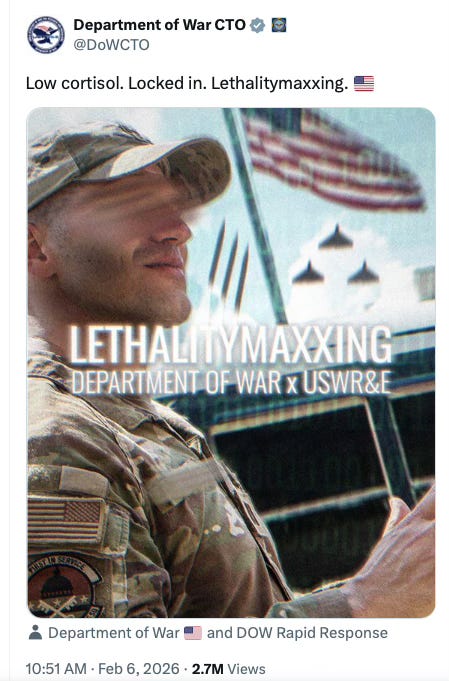
Of course, part of what they lethalitymaxxed was an Iranian primary school for girls, killing hundreds of children in the process.
Anyway, invoking a term that’s rooted in literal white supremacist culture on behalf of a reading app primarily tied to libraries is gross and I said as much to the PR firm that pitched me.
You know what I miss? Deliberation. I would like to know the process that led this PR company to decide to launch their “maxxing” pitch, how it was conceived, vetted, client-approved, and then executed. I would like to know how at no point did some human being raise a red flag about the possible downsides of linking their product to incel white supremacists. Have we truly lost the ability to communicate to the point where even a reading app must spread its message via meme?
And what is this business about reading more books being some kind of objectively desirable goal? I wonder if this is just the latest example of the presence of AI having broken some brains, that it has somehow become our job to compete with them when it comes to speed or capacity.
I previously delivered my rant “against optimization,” so maybe I am just repeating myself here.

But there is something more specifically wrong about equating volume with meaning or pleasure. This is simply not how humans experience the world. I greatly enjoy eating, but I am not envious of Monty Python’s Mr. Creosote from The Meaning of Life.
The humor of that sketch is in the professionalism and nonchalance of John Cleese’s waiter juxtaposed against Terry Jones’ exploding man. Maybe less nonchalance is called for in the face of the obviously destructive. I tend toward the libertarian when it comes to the choices other individuals make with their own lives - provided they aren’t harming others - but maybe we need to step up our collective judgment against obvious indignities against humanity.
The young gentleman Clavicular appears to be in the grips of some kind of mental and/or emotional disorder, possibly exacerbated by addiction. The suffering human deserves our sympathy. The movement he represents deserves our scorn.
From the very arrival of ChatGPT I have championed using this technology as a lens through which we can determine what most matters when it comes to being human. To me this is obviously the most important promise of AI.

To that end, you can read a recent piece by Notre Dame professor Alexander Kustov in which he declares that “AI can already do social science better than most professors,” by which he means it can generate a potentially publishable journal article, two ways. One way is to suggest that we should deploy AI to do much more social science research, as it is superior to humans.
Another way, as articulated by Dave Karpf at his newsletter, is to question the system the privileges journal articles that can be churned out by AI in order to tick a box on a credential.
Perhaps I am one of the humans who is going to get steamrolled by the AI revolution, but I will continue to insist that one of our best, most proactive responses to the technology, particularly in contexts where speed and optimizing productivity are not de facto values, is to “do less that matters more.”
Part of what we must continue to do for ourselves is to use our human capacities for deliberation, discernment, and judgement.
I had a nearly identical reaction as becca rothfeld to part of a recent Ezra Klein interview of Anthropic co-founder Jack Clark in which Clark confessed to turning to his company’s Claude product for advice on workplace conflict. Rothfeld:
At some point in the interview, Klein asks him [Clark] about the pitfalls of engaging with relentlessly affirmative and ingratiating chatbots—Klein, by the way, does a very good job of holding Clark to account throughout—and Clark replies that AI needn’t be used for self-affirmation. In fact, he explains, he uses it to help him occupy other people’s perspectives: “I’ve used these A.I. systems to basically say: Hey, I’m in conflict with someone at Anthropic. I’m really annoyed. Could you ask me some questions about that person and how they’re feeling to try to help me better think about the world from their perspective?”
He didn’t even pause before confessing that he’d used AI in this way and didn’t appear to think it was a cause for shame or contrition. aaaaggghhhHHHHHHHHHH!!!!!!!!!!!!!!?? I don’t know what’s worse, using AI in this fashion, or thinking that using AI in this fashion is such a normal, acceptable, and forgivable thing to do that you should admit to having done so on a podcast in a national newspaper.
Throughout the entire interview Clark seems thoughtful and reasonable, but in the spirit of my newfound desire to be more judgmental, frequently what he posits about a healthy and productive relationship with AI technology is simply grotesque. As Becca Rothfeld asks “What brings a person to the point where it seems natural to consult an AI for help with the most basic functioning of the moral apparatus?”
I’ve long ago tuned out the “AI is inevitable” hype because I know that this is not true for me, but maybe I need to pay more attention to what’s going wrong for the people who accept and embrace this idea because they appear to be increasingly impossible to avoid.
Links
This week at the Chicago Tribune I wrote about a novel I remain confused (but also intrigued) by, Haven by Ani Katz.
At Academic Freedom on the Line I explored a classroom debate from years back that could potentially land me in trouble if I taught in today’s University of Texas system.

Here’s some notes from a bookstore event from last year celebrating the 30th anniversary of Infinite Jest featuring DFW’s agent, Bonnie Nadell, and editor, Michael Pietsch.
At Defector, Pete Segall writes about Don DeLillo’s funniest novel, a book that I have as signed, hardcover first edition copy.
I’ve now clicked on this from The New York Times app three times, so maybe it’s of interest to others as well, “32 Novels We’re Excited About This Spring.”
Via my friends McSweeney's some “looksmaxxing” related humor, “To Get Hot, Break Your Jaw, and then Everything Else,” by Madeline Goetze and Will Lampe.
Recommendations
1. This is Happiness by Niall Williams
2. Giovanni’s Room by James Baldwin
3. The All of It by Jeannette Haien
4. Angle of Repose by Wallace Stegner
5. Ex Libris: Confessions of a Common Reader by Anne Fadiman
Adrian N. - Aurora, CO
This book ain’t all happiness and light, but neither are the books on this list so I think Adrian (who writes his newsletter on teaching here) will be able to handle it, Revolutionary Road by Richard Yates
Hello Austin Texas, I’ll be in you next week as part of SXSW.edu presenting with my friends at Frankenstories.
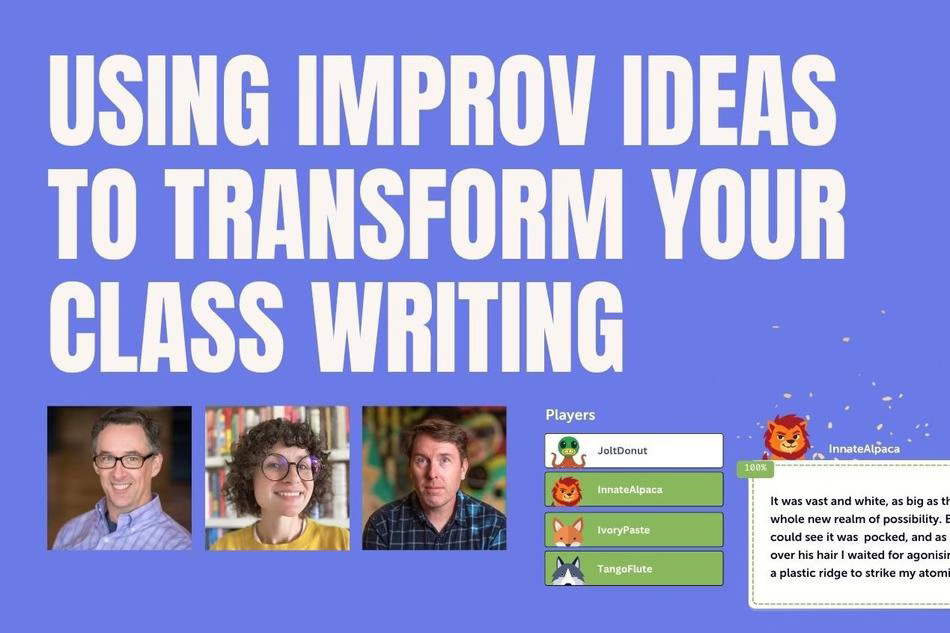
Thursday, 2pm, be there for some good fun and make sure to say hi if you see me.
I don’t have a ton of unscheduled free time, but please feel free to give me your best Austin recommendations in the comments.
I’ll see you next week, quite probably with a report from conference which both excites and terrifies me.
JW
The Biblioracle
Deliberation. Sigh. We miss it too. 😔
Terrific post. When I read your essays it feels like the Rocky moment on the stairs. Yes!!!