
What's Wrong With Men?
Where to start? Some fiction that works the problem.

I wish I had some special wisdom about what to do about the problem of boys, men, and the manosphere, I’m as at sea as everyone else.
Like a lot of other folks, I recently ripped through new Netflix series Adolescence, in which Jamie, a 13-year-old boy, consumed by insecurity, and steeped in an online culture of misogyny, murders his female classmate.
That’s not a spoiler; the show isn’t a whodunit. It’s a narrative about consequences and recriminations for the boy, his family, his community. The show suggests that these dangers are lurking and teen boys are potential powder kegs ready to blow. in the New York Times, Rachel Louise Snyder, reflecting on the show and its relationship to the real world says “we underestimate the manosphere at our peril.”
I suppose I’m not entirely at sea in that I very specifically and viscerally recall feeling much like Jamie when I was about his age that I was not someone worthy of attention, affection, and love from these girls I found so powerfully intriguing. Jamie is portrayed with empathy throughout the series, even as we understand he has done something horrible. His actions are not excused, but they are understood. The biological reality of puberty means boys are, in some sense, powder kegs, sense overwhelmed by hormones as you lack world experience to understand it. We don’t even have fully developed cortexes!
But this does not excuse boys turning toward misogyny or abusing women as a response to this emotional turmoil. It’s not like this is a winning long term strategy for the heterosexual boy’s putative objective, anyway. When I was worried that I was too ugly and uncool for a girl to like me I tried to work on treating them like interesting human beings so they might one day seem me in the same light.
In the same way I recently mused about how I managed to avoid developing racial prejudices despite growing up in a nearly all-white suburb, I’ve been wondering what accounts for the fact that at an early age I managed to internalize the fact that women are the equal of men and that a gendered hierarchy does no favors for either sex.
I would like to believe that had the online manosphere existed during my youth that thanks to my upbringing and values I would not have been swayed, but who knows? It’s probably a mistake to discount the impact of culture, particularly when we are experiencing the very real consequences of this culture as we move backwards on women’s rights, civil rights, and basic respect for differences.
But in the same way that I grew up during an interregnum between the Civil Rights era and the long backlash of white supremacy now finding full flower, from a young age I was steeped in messages of female equality and empowerment, none more frequent or more potent than Free to Be You and Me.

As I articulate in that piece at my Engaged Education newsletter linked above, I was apparently liberally brainwashed by such messages that housework is something to be shared and women should be able to choose who they marry for themselves. Even as I was bopping along to the album’s title track, the Equal Rights Amendment was on its way to stalling out, at least partially because it didn’t seem necessary, given the progress women seemed to be making.
But of course all that progress has been met with backlash and Trump II could really be seen as a backlash presidency, and man who proudly preys on women as President, surrounded by others who seem similarly oriented.
What is the positive message about gender equality for young men when joining the broligarchy seems to have real-world benefits?
I suppose I could give it a shot and suggest that empathy and treating others with dignity can be a fulfilling way to go through life and is sometimes rewarded in turn. I might say that it’s not a black mark on your manhood for your wife to have more education or make more money than you provided you are in a committed partnership of mutual support with that person.
I had a no worse than average time during puberty and it was still pretty horrible at times, because you really don’t have a strong sense of who you are or should be. I was lucky. I had good parents, and a handful of good buddies who were experiencing the same confusions.
I never felt truly alone, and don’t recall reaching any trough of true despair. I guess I never doubted there was something on the other side.
And while books aren’t magic, they do help. In some cases they help by taking you out of your own situation and putting you in someone else’s that’s entirely different. In other cases, you might read a book that speaks so powerfully to what you’re going through that you feel less alone. Again, I don’t think getting all these teenage boys reading is a cure for society’s ills, but things might be a bit better if more time was spent with a novel and less with Joe Rogan.
Don’t take the following list as somehow a definitive accounting for great novels that deal with the challenges of achieving stable manhood, but do consider them some books wrestling with these issues that are worth your time.
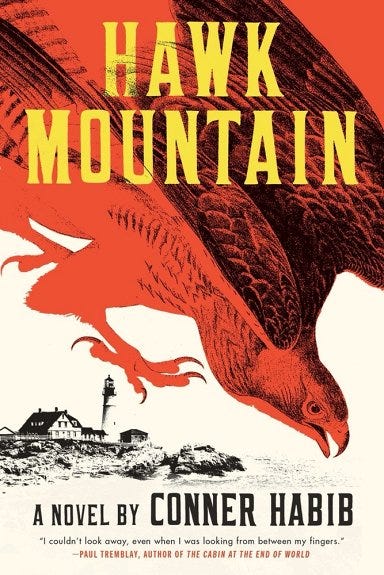
Todd is a single father on the beach with his young son when he’s approached by a man who bullied him relentlessly when a boy. Jack treats Todd like an old friend and quickly winnows his way into Todd’s life. The marketing copy describes Hawk Mountain as “gruesome and tender” which is as apt as I can imagine.
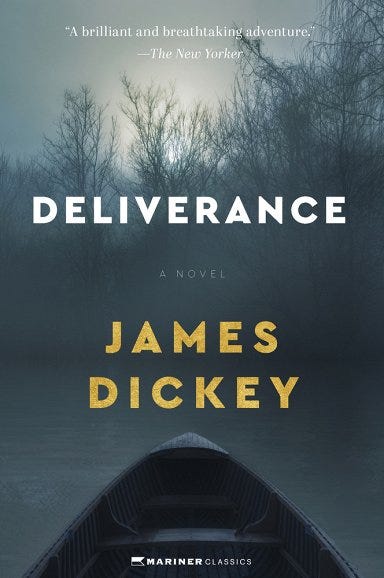
Lots of people know the film adaptation of Deliverance where Ned Beatty squeals like a pig, and while the film is faithful to the novel, the nature of the difference in mediums allows for greater psychological depth in Dickey’s telling.
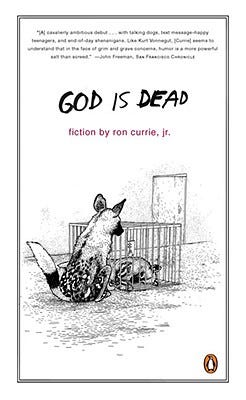
Ron Currie Jr. is on my mind because I reviewed his new novel, The Savage, Noble Death of Babs Dionne this week at the Chicago Tribune. The premise of God Is Dead (A linked collection of short stories) is that God makes herself known to the world and then we kill her simultaneously confirming to the world that the divine exists, but we are so fallen that we murdered the Almighty. I’m actually thinking of one story in this collection titled “Indian Summer,” which is as harrowing a look at young manhood untethered from good sense as you can imagine.
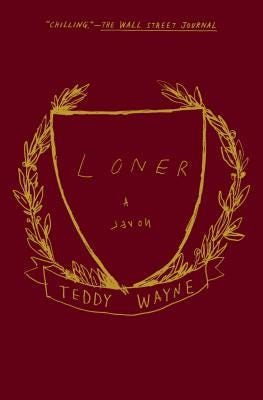
My friend, Teddy Wayne, is probably the most consistently interesting novelist of troubled manhood writing today. In every book he manages to channel empathy without exculpation for some very dark acts. Loner, the story of an academically talented, but awkward and forgettable college freshman who becomes fixated on what he thinks he needs for his own happiness is not for the faint of heart, but it also pretty unforgettable.
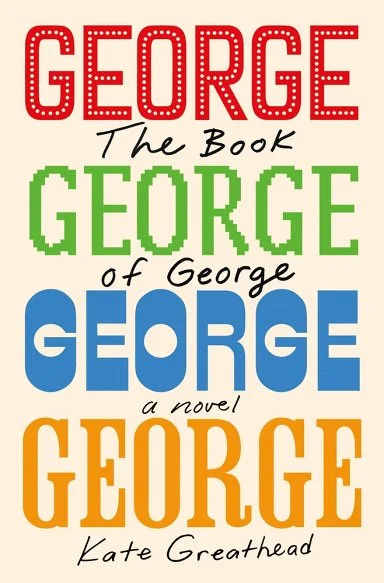
Lest we think only men can write interesting novels about the difficulty of becoming a man we have The Book of George by Kate Greathead, who happens to be married to Teddy Wayne, and in this novel gives us a simultaneously sympathetic and scathing, gentle and scabrous look at the life of George who everyone thinks is sort of great, but also can be kind of awful. Following George from childhood and into his 40’s we see a boy become man who has a very hard time getting out of his own way.
I read a review of The Book of George that said it’s great “millennial” novel, but I think this sells it short by suggesting it’s some kind of encompassing portrait of what ails a generation. What makes the novel work, what makes all these novels work is their specificity, not their generalizability.
Figuring out how to be oneself is really the goal, right?
If that is the goal, the kid in this video is the most well-adjusted person on the planet.
What novels come to your mind that help us understand the challenges of manhood?
Links
As mentioned above, this week at the Chicago Tribune I reviewed Ron Currie Jr.’s terrific new novel, The Savage, Noble Death of Babs Dionne.
At Inside Higher Ed I not-so-patiently explain how large language models can never do student peer review because they are not in any sense of the word, “peers.”
Monday morning you can tune in to find out the winner of this year’s Tournament of Books. Catch up with all the action and make your prediction for the final matchup here.
At his Blood in the Machine newsletter, Brian Merchant unpacks the truly vampiric nature of OpenAI’s generative AI models and the grave insult they’ve done to the work of Hayao Miyazaki and his Studio Ghibli.
A.O. Scott ponders the meaning of The Great Gatsby as it approaches its 100th birthday.
At her Unmaking the Grade newsletter Emily Pitts Donahoe asked me some interesting questions about More Than Words: How to Think About Writing in the Age of AI.
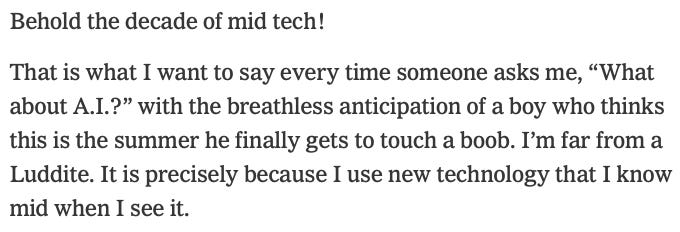
Can’t not recommend this op-ed from Tressie McMillan Cottom about the “mid” tech of generative AI which opens with this and gets even better from there:
From my friends McSweeney's Internet Tendency, an answer to a question I’ve always wondered about, “We Are the People Who Buy Red Delicious Apples” by Ryan Abbott
Recommendations
1. Mother And Sons by Adam Haslett
2. No One Belongs Here More Than You : Stories by Miranda July
3. Blood On Snow by Jo Nesbo
4. Dream State - Eric Puchner
5. Memorial Days: A Memoir by Geraldine Brooks
Joe F. - Channahon, IL
Joe is a return customer so I have to try to make sure I don’t recommend whatever I recommended last time, which I’m not going to look up because that’s just how I roll. I’m going with one of my favorite offbeat noirs, The Mystic Art of Erasing All Signs of Death by Charlie Huston.
1. Foreverland by Heather Havrilesky
2. In Patagonia by Bruce Chatwin
3. The Dispossessed by Ursula Le Guin
4. The Rachel Incident by Caroline O'Donoghue
5. The Wager by David Grann
Havi H. - Takoma Park, MD
I think Havi will enjoy the unfurling mystery of Karen Joy Fowler’s We Are All Completely Beside Ourselves.
It’s not like I thought More Than Words: How to Think About Writing in the Age of AI would suddenly turn the tide of discussion away from outsourcing our humanity to syntax generators, but I have to say that I’m distressed with what I perceive to be additional ground lost in the debate over preserving human experience over the ease of automation. I wish I had a bigger megaphone to get the word out because I fear we’re about to lose something we can’t get back once it’s gone. Please spread the word that reading and writing matter wherever and whenever you can.
I guess I’ll close with my own attempt at a contribution to the fictional study of troubled masculinity, a short story from my collection Tough Day for the Army titled, “Not Schmitty.”
Take care, and see you next week.
JW
The Biblioracle
The idea that an alternative to the manosphere and hating women (as a response to the discontents of being a man) is reading novels about manhood is so simple, but unexpected and astute.
Yes: the current response to women by so many men isn’t the only option. I love this reframe.
Perhaps too, some older books? The Catcher and the Rye or Krakauers Into the Wild come to mind. Part of what many teenagers miss growing up in suburbia are opportunities to test ones physical fortitude and courage and to encounter risk. Without those opportunities, and the catharsis they provide, it's harder to face all the other more social challenges adolescence throws at you.