

One of the first things I tell students in my writing courses is that when it comes to writing there is no such thing as terminal proficiency, meaning there is no point at which you exhaust your ability to continue to improve as a writer.
This is both great and terrible news.
The great news is that should you choose to dedicate yourself to writing, you can find an inexhaustible supply of fresh challenges to tackle. As soon as you think you have one thing figured out, just try something unfamiliar and you’re a beginner all over again. Over time, the engagement and '“solving” of those challenges becomes a pleasurable feedback loop with its own rewards.
These weekly posts are a version of this challenge, where I start with a “notion” and see if I can write my way into a discovery for myself, and something interesting for the reader.
The terrible news is that once you embrace this ethos, writing becomes an extended exercise in failure, of falling short of heights that you envisioned for yourself, or that you are aware of that can be reached by others. Some of the best writers I’ve known have not figured out how to get past their disappointment and just share what they have with the world, as imperfect as it may seem (and actually is).
Thankfully, I do not have this problem.
At the end of last week’s links section I shared an essay by Garth Greenwell on Philip Roth in the Yale Review that I said I was hoping to tackle in the coming days. Well, I tackled it, my friends, and it was both interesting and humbling (in a good way). The depth and breadth of insights in the piece are just fantastic, particularly for a reader like me who is Roth-familiar, but is perhaps not a full on Roth-fanboy.
(Despite being the owner of Philip Roth’s clock radio.)

Greenwell is wrestling with how to talk about the art of Philip Roth in an era where much of what Roth writes about is now viewed as a toxic space. It is a good and thorny question.
I like to think that as a writer I’m capable of delivering some previously un-mined insights about the subjects I choose to tackle, but reading Greenwell’s essay I realized that I can’t do what he’s done in that piece.
There’s a number of reasons I can’t do that. One is that writing that kind of piece takes a sustained period of focus and concentration that is generally not available to me given the necessary rhythms of my work, publishing multiple things a week to earn my daily bread. One of the reasons I advocate for more public support for the arts is so folks like Garth Greenwell are given the time necessary to deliver these insights.
The more important reason is that I’m not smart enough or learned enough. This is not false humility. I am a professional, and one of the abilities one acquires as a professional is being able to recognize the work which rises above the mere professional to true superiority.
For example, everyone on an NBA court is a pro, but when you see Giannis Antetokounmpo of the Milwaukee Bucks chase down a Washington Wizard who has just stolen the ball and has a 1/3 of the court lead toward the basket, only to have Giannis catch him and block the shot as though it was routine, you understand that there is another level.
One of the subsections of Greenwell’s piece is titled “An Apophatic Theory.” I had to look up what “Apophatic” meant (a theological theory in which you try to describe the divine by what it is not, rather than what it is) and then I had to try to apply that to Greenwell’s point about the difficulty of talking about Roth and his work, and once I’d done that, I felt like I’d scraped the absolute limits of my own understanding.
It was sort of exhilarating. I simultaneously felt both a little dumb and smarter than I was previously.
I will admit that prior to finding my own niche as a writer from which to build, I would sometimes react with more resentment and frustration than appreciation nd awe, but now, it’s almost entirely the latter.
I just turned 53 this past week. Sometimes when I bend into a squatting position my knee joints sound like castanets, but developing a healthier perspective on these other things as I age has been a real boon to the spirit.
The vast majority of the students I’ve worked with in the past or will work with in the future have no interest in continually pushing the limits of their ability as writers, which is fine. It’s more than enough for them to simply recognize the truth about the lie of proficiency.
Just as there is no terminal proficiency when it comes to writing, the same is true of reading.
My guess is that the sort of people who are drawn to this newsletter are already quite proficient as readers, able to accurately discern both the plain meaning of a text and discern subtext. You can understand and appreciate shifts in tone, the use of rhetorical devices like sarcasm and hyperbole as tools of expression, rather than literal sentiment.
You would not read Swift’s “A Modest Proposal” and think he’s actively advocating for the children of Ireland to be “stewed, roasted, baked, or boiled.” This is a bit of a rarer skill than one who possesses it might think and the opportunities to practice reading in a way that develops this kind of skill are not as prevalent as they once were.
But this is perhaps a worry best explored in a newsletter of its own.
The language I’m going to use to work through these ideas is going to get a little tricky, so I want to be careful about how I frame the discussion. I want to talk about how to get “better” as a reader, but I want to be clear that by “better” I don’t mean to suggest any kind of moral superiority or even enhanced status from which to render a judgment.
Really what I’m describing are some ways to add a different set of tools to your reading arsenal that may enhance your enjoyment of books, ways to read more closely. Everyone should be comfortable in drawing their own lines around their own enjoyment. As an analogy, I have been playing guitar for almost 40 years and I remain barely passable at the instrument. If you want to have a group sing around the fire pit to Bob Dylan and Grateful Dead tunes and every verse of “American Pie,” I’m your guy to play the chords that are close enough to accurate.
If you’re looking for someone who is, you know, actually good at guitar, that’s not me.
But getting markedly better at guitar would not enhance my enjoyment of the instrument. If it would have, I might’ve put more time into pursuing increased competency over the years.
So, if you feel like, “I’m good,” skip down to this week’s recommendations. If you’re curious about a couple of ways to think about reading more closely, scroll on.
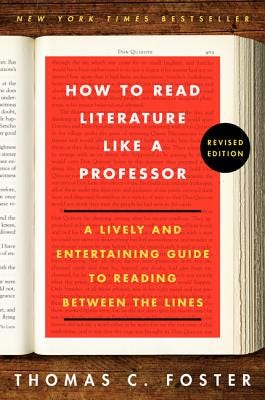
How to Read Literature Like a Professor by Thomas C. Foster is the first in a series of books, which also includes How to Read Poetry Like a Professor, How to Read Nonfiction Like a Professor, and How to Read Novels Like a Professor.
Reading these books is like spending time with your favorite college English professor whose genuine enthusiasm for books could win you over to taking a deeper look alongside them, even if you might find all that talk about symbols and metaphors kind of pointless and silly.
These books can help a reader better appreciate what additional meaning may lurk underneath a text, by giving us a handy entry into the ways literary scholars look at and break down a work.
If more of my literature classes had been infused with Foster’s spirit, I might’ve done more than cranked out competent, but uninspired essays meant to check a box during my undergraduate English studies.
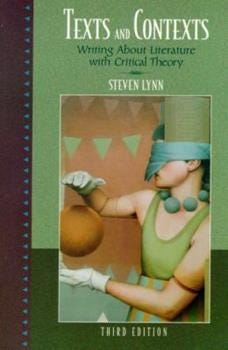
If you dig what Foster is up to, but want to take it up a notch, Texts and Contexts: Writing About Literature with Critical Theory by Steven Lynn is an accessible guide to specific schools of literary analysis, e.g. New Criticism, Reader-Response, Deconstruction, etc….
(Seems like you’re going to have to find this one used, but there’s lots of copies in circulation.)
This is a book I’ve used a number of times when I’ve been over my head in teaching a course that required a kind of overview of these different schools when it became clear that whatever I’d retained from my graduate studies was…uh…limited.
What I like about the book is that it’s a “how to…” that walks you through both the theory and method of each approach. Even if you’re not planning on writing any literary criticism, seeing theory extended all the way into an output is very helpful when it comes to truly understanding the underlying concepts.
Now I gotta be honest. As helpful as I think these books are, for whatever reason, as a reader, my interest in the fundamental question they ask about a text - What does it mean? - has always been somewhat limited. I’ve always been more engaged with the question of How did it do that? which is the province of learning to read like a writer.
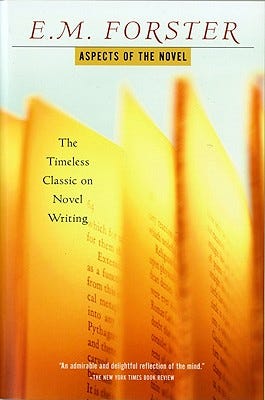
Written by the author of classics like Howard’s End and A Room with a View, Aspects of the Novel is a highly accessible primer on the concepts a novelist concerns themselves with as they create: story, people, plot, fantasy, prophecy, pattern and rhythm, with each of those subjects serving as the centerpiece for a chapter in this slim volume.
There is a passage in the chapter on “people” that stopped me in my tracks when I first read it sometime during my first semester of graduate school because I think it perfectly explains my own fascination with both writing and reading:
This is perhaps a roundabout way of saying what every British schoolboy knew, that the historian records where the novelist must create. Still, it is a profitable roundabout, for it brings out the fundamental difference between people in daily life and people in books. In daily life we never understand each other, neither complete clairvoyance nor complete confessional exists. We know each other approximately by external signs, and these serve well enough as a basis for society and even for intimacy. But people in a novel can be understood completely by the reader, if the novelist wishes; their inner as well as their outer life can be exposed. And this is why they often seem more definite than characters in history, or even our own friends; we have been told all about them that can be told; even if they are imperfect or unreal they do not contain any secrets, whereas our friends do and must, mutual secrecy being one of the conditions of life upon the globe.
That emphasis there is mine because I think it’s what makes reading imaginative narratives such a unique experience in life. Forget about Mark Zuckerberg’s immersive goggles, the only true virtual reality technology in existence is the book. What else has the potential to put you literally inside someone else’s consciousness?
The way that Forster talks about the work of writing novels can make anyone appreciate how remarkable those creations can truly be.
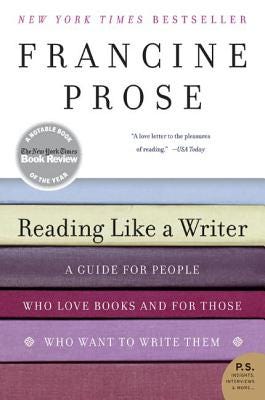
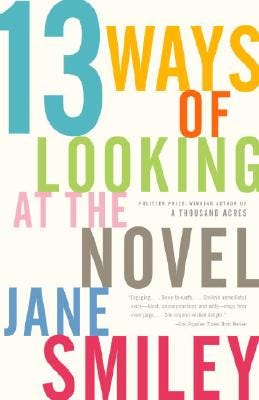
I’m grouping Francine Prose’s Reading Like a Writer and Jane Smiley’s 13 Ways of Looking at the Novel because both are among our top contemporary novelists, and because these books are similarly situated as being good guides for both writers and readers.
Both books are essentially a series of exercises in close reading through the novelist’s eye. Prose is often more concerned with finer points of interest, while Smiley is working in a mode closer to Forester in Aspects of the Novel, but the overall effect is more alike than different.
Reading like a writer is less about the what a text means and is more concerned with how a text creates meaning. It’s like looking under the hood of a car and knowing how the different parts of an engine combine to deliver power to the vehicle.
Both Prose and Smiley are excellent companions as they lead us along their reading journeys that are simultaneously clearly personal, but also universal.
One of the things these books illustrates is how the more you read, the more fodder you have to make connections between the various things you’ve read. Both books are by people who have spent their lifetimes interacting with fictional narratives and what we’re experiencing in these books is a kind of accumulated wisdom.
While most of us are not going to have the opportunity to record our learning in the form of a volume sold to others, all of us have the ability to make what we’ve experienced and learned more visible to ourselves through the kind of reflection that these books model.
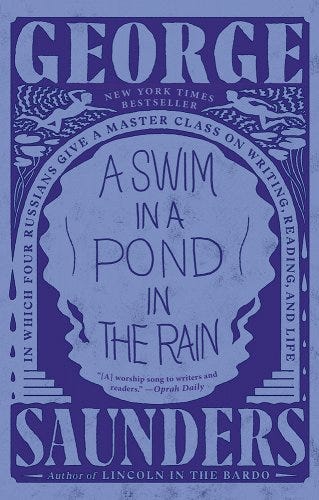
A Swim in a Pond in the Rain by George Saunders is a paragraph-by-paragraph, sometimes even line-by-line or word-by-word demonstration of what it is like to read like a writer. Using one story each by four different Russian masters (Chekhov, Turgenev, Tolstoy, and Gogol), Saunders examines the choices that result in stories that have endured across both time and different cultures.
The book is akin to the so-called “slow food” movement, where the experience is deliberately arrested, forcing you to taste, and then taste again and again to see what you notice each time.
For me, reading this book was like hopping in a time machine back to my graduate studies when my colleagues and I would pour over texts like Talmudic scholars, sharing insights in an effort to better understand their power.
I wanted to know how, and why the closing lines of Andre Dubus’s short story, “A Father’s Story” causes tears to well in my eyes every time I read it, including just now.
Saunders demonstrates the method by which you can introduce yourself to this particular magic.
If someone was thinking of going to graduate school for creative writing, I would tell them to read this book.
Afterwards, they know one of three things: 1. This kind of thinking is not something you’re going to enjoy and therefore shouldn’t go to graduate school where it’s going to be your primary activity. 2. You love it and want to be surrounded by other people who love it too, or 3. You love it, but feel like you know enough to go off and keep working the problem on your own.
I pretty much only write fiction as a hobby these days, but I can honestly say, it’s as interesting to me now as it ever was, and these books help me understand why.
Links
This week at the Chicago Tribune I wrote about my preemptive worry that my book club was not going to respond well to my choice of Nathanael West’s Miss Lonelyhearts and The Day of the Locust. Turns out I was correct to worry as the book was a total flop, but thankfully we had a good discussion anyway.
To you and me it may feel like the year has just gotten underway, but to Town & Country, it’s time to start telling us about the best books of 2023.
Perhaps I’m a little premature in believing that Philip Roth’s reputation is on the decline, given that Erin Somers spent an entire weekend at a Philip Roth festival.
The Chicago Review of Books has “12 Must-Read Books for April.”
This week’s laugh from McSweeney’s comes in the form of “Miss Piggy Does the Cool Girl Monologue from Gone Girl,” by Laurie K. Batzel.
Recommendations
All books linked here are part of The Biblioracle Recommends bookshop at Bookshop.org. Affiliate income for purchases through the bookshop goes to Open Books in Chicago and another book-related charity still to be named.
Affiliate income is $89.50 for the year.
1. The Woman Lit by Fireflies by Jim Harrison
2. Swimming Lessons by Claire Fuller
3. Horse by Geraldine Brooks
4. Demon Copperhead by Barbara Kingsolver
5. Tinkers by Paul Harding
Dennis F. - Asheville, NC
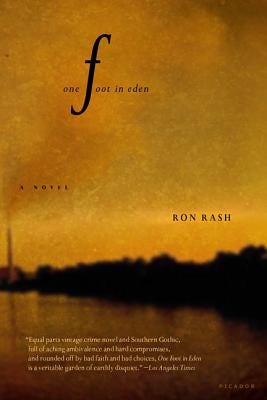
Since Dennis is located in Asheville, there’s a good chance he’s already familiar with a writer whose books are set in Western North Carolina, but if not, this situation needs to be immediately remedied, so my recommendation is One Foot in Eden by Ron Rash.
The very stable genius that is Elon Musk has started restricting interactions with Substack content at Twitter, possibly because of a forthcoming Substack feature called “notes” which is currently in beta testing and does seem a lot like Twitter, or possibly because he’s a petulant man-baby who is incapable of thinking strategically.
On average, less than 5% of the traffic to this newsletter comes from Twitter, though my biggest moments of growth come when someone with a large social media following takes a shine to something I write here.
I don’t know what this really means going forward, but if you do like the content here, the best way to support this endeavor is to share through whatever channels you may access and subscribe if you’re able.
Thanks, as always, for reading, and Happy Easter to all who observe.
John
The Biblioracle
As a reader but not a (literary) writer, I love what you present here. That we can always improve in any endeavour is of course clear, but I had never considered how working on being a better writer parallels with becoming a better reader. Even with a couple of English literature degrees to my name, I found How to Read Literature Like a Professor very useful (and actually fun). And Smiley can do no wrong in my book (see what I did there?). I wrote a literary analysis paper using 13 Ways as a framework back in my undergraduate days (that book must be old!). It's hard for me to turn off my "academic" mind when reading for pleasure and keep myself from over analyzing a text, which after reading this post I can see is not unlike a writer revising and revising ad infinitum.
Somehow this conversation reminds me of Paul Valery's quote "A poem is never finished, only abandoned." Because I'm not a poem or fiction writer, I kind of understand this but haven't experienced it. I'm now thinking it applies to my experience of reading and my ongoing work to allow myself to experience and delight in a text without having to find endless ways to analyze it, contextualize it, etc.
I’ve been meaning to read Greenwell’s essay since it came and this pushed me to do it. Wow—it hit on so many questions I’ve been asking myself about cancel culture and art. It’s going to be pulling at my brain for some time as I haven’t fully understood it yet.Sorry I was out of town for the April book club (I couldn’t open the article you wrote about it) but looking forward to Mrs. Caliban. The description immediately reminded me of The Shape of Water, which I loved so I’m looking forward to diving in, so to speak.